
Have you been searching for the right skincare for a long time – but don't even know your skin type? Then you've come to the right place on our blog. We at Sanft & Schön are happy to guide you through the jungle of different skin types and product descriptions and help you confidently navigate your individual skincare journey with practical tips.
Does the product mention ‘Skin types'Manufacturers are basically referring to the appearance and condition of your skin. Properly caring for it is very important for your body, because: With a total surface area of two square meters Your skin is your largest organ and performs numerous vital functions. It's not only an energy store but also a protective shield against external influences, and its millions of receptors help you perceive various stimuli such as temperature and touch. Therefore, our skin is a vital organ that you should definitely learn about and take good care of.
What is my skin type? What determines your skin type?
Your skin type essentially depends on your skin's sebum production. It's not just the activity of sebum production that matters, but also the composition of the sebum itself. Additionally, your skin's moisture production and its ability to retain moisture are also assessed.
Your skin type is partly genetic, but certain characteristics of your skin are also influenced by external factors and your lifestyle. Regular alcohol consumption dehydrates your skin cells, which impairs your skin's regeneration and causes it to age faster. Your diet and hormone levels also affect your skin's condition. Perhaps you remember your puberty, in which you were particularly prone to skin impurities due to hyperactive sebaceous glands.
So the good news is: You are not completely at the mercy of your genetics and can freely follow the motto "Beautiful skin from within“with the right skincare, also for Men and a healthy lifestyle can contribute significantly to a more beautiful complexion – even if you are struggling with skin type-specific problems.
Why is it important to know your skin type?
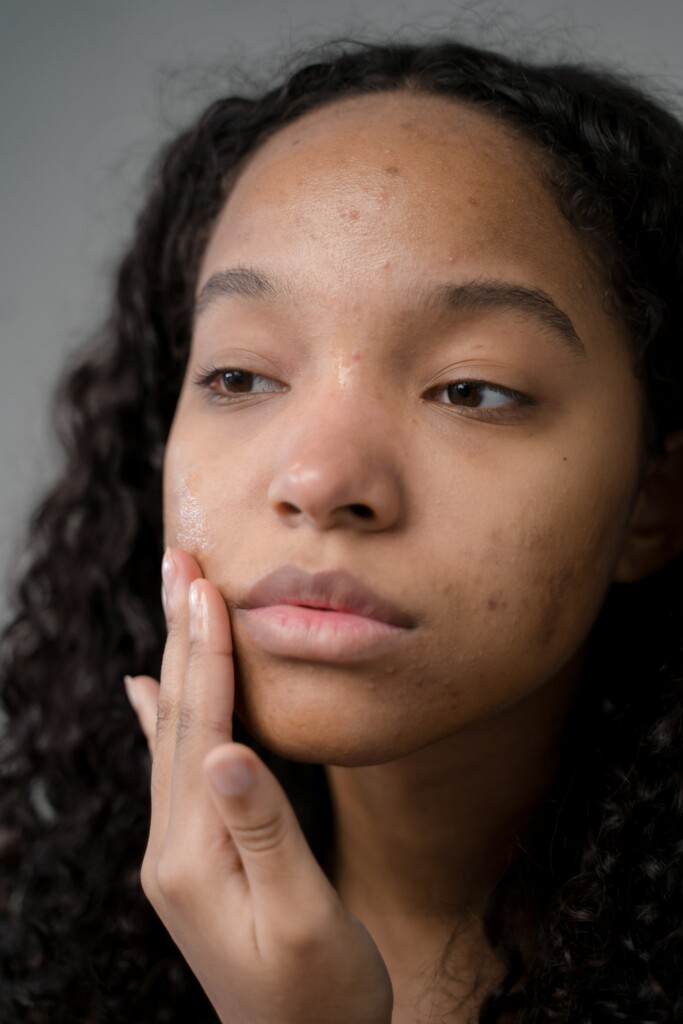
That's a very good question. Determining your skin type isn't just about choosing the right skincare products. If your skin regularly itches, dries out, and gets oily, these symptoms can interfere with its daily work as a vital organ. Knowing your skin type is therefore not only for aesthetic reasons, but also for medical ones.
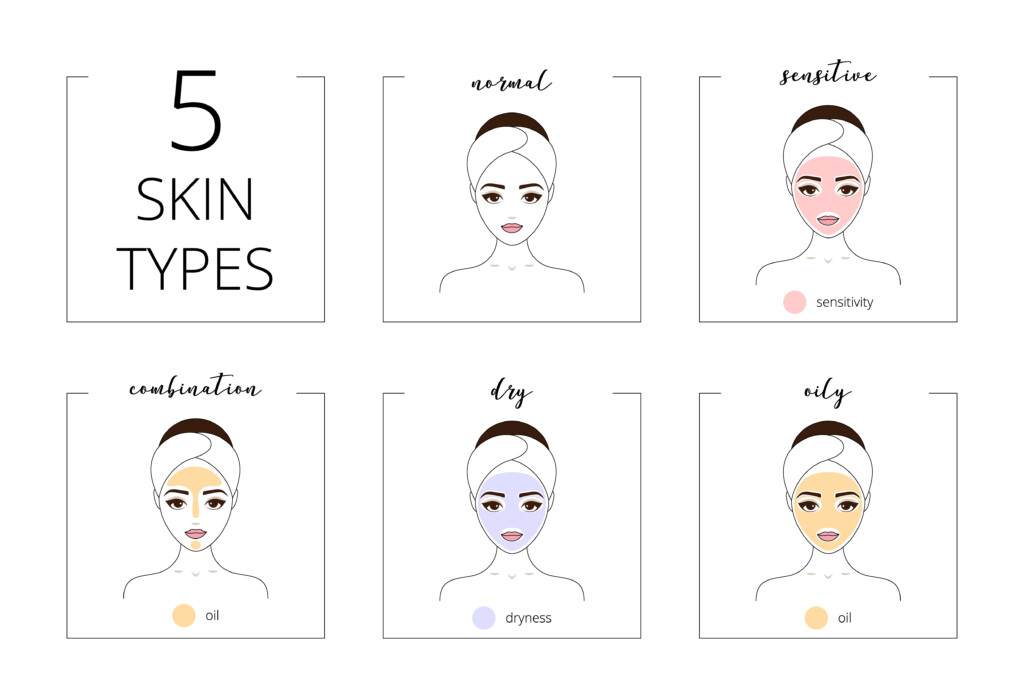
So that in the future you will not only Beauty Trends 2022, but also know your skin type, we will now introduce you to the characteristics of the different skin types – normal skin, dry skin, sensitive skin, oily skin and combination skin.
Determine your skin type: #1 Normal skin
You don't really have any problems with your skin and skincare is a straightforward topic for you? Then you might be one of the lucky people with normal skin.
Here's how to recognize normal skin:
Your skin has medium to fine pores and is neither excessively oily nor prone to dry or rough patches. Skin oil (sebum) and moisture levels are largely balanced.
Here's what experts say about normal skin:
Congratulations! You are one of those people who have an uncomplicated, radiant skin Normal skin is so unproblematic because its acid mantle is stable and can therefore effectively ward off external influences. However, to maintain this, even normal skin requires proper care.
Determine your skin type: Our skincare tips for normal skin:
Determine your skin type: #2 Sensitive skin
Does your skin react negatively to new skincare products and are you plagued by redness? Then your skin may be very sensitive.
Here's how to recognize sensitive skin:
Your skin is thin, fair, and often slightly dry; in addition, your outermost layer appears flaky and reddens easily. Redness, itching, or an unpleasant feeling of tightness also appear on your skin as soon as you use a new skincare product. All three symptoms are a clear indication that you have sensitive skin. A common cause of this type of irritation is a damaged skin barrier.
Here's what experts say about sensitive skin:
If your skin is irritated by certain skincare products, an allergy to the ingredients is often responsible for eczema or other skin conditions such as seborrheic dermatitis or rosacea. It's best to consult your dermatologist to find out the trigger for an allergic reaction.
Determine your skin type: Our skincare tips for sensitive skin:
Determine your skin type: #3 Dry skin
Do you suffer from tightness in your skin not only in winter, and are creams immediately absorbed by your skin? Then you probably have dry skin.
Here's how to recognize dry skin:
Your skin is fine-pored, rough, cracked, and brittle. It feels tight, flaky, itchy, and in some places, redness is already visible. The sebaceous glands, which are supposed to keep your skin elastic, supple, and slightly moisturized, are producing too little oil – disrupting the regulation of your skin's moisture and leading to the formation of fine lines caused by dryness.
Here's what experts say about dry skin:
Not only age, genetic predisposition, malnutrition, alcohol and tobacco consumption, or environmental factors like dry air from heating can cause dry skin – but also various illnesses such as eczema or psoriasis. Dry skin is also a common side effect of medications.
Determine your skin type: Our skincare tips for dry skin:
Determine your skin type: #4 Oily skin
Do you think your skin is rather oily? Then the following characteristics will probably sound familiar.
Here's how to recognize oily skin:
Your skin has large pores, shines, and has a noticeable oily film, which is due to excessive sebum production. The thickness and density of your skin are generally very good; it is robust and insensitive – and therefore only tends to develop wrinkles or lose elasticity very late.
Here's what experts say about oily skin:
Compared to normal or dry skin, this skin type is characterized by an overproduction of sebum and a keratinization disorder of the sebaceous glands. Because the sebum can no longer drain properly, blackheads form. At the same time, the mixture of dead skin cells and sebum provides an ideal breeding ground for bacteria. This can lead to inflammatory reactions in your skin, resulting in redness and pimples.
Determine your skin type: Our skincare tips for oily skin:
Skin type 5: Combination skin
Does your skin feel tight in some areas, yet you struggle daily against oily shine? Then you probably belong to the combination skin category.
Here's how to recognize combination skin:
You don't identify with any of the skin types presented so far – because although your cheeks feel relatively dry, your nose, forehead, and chin are oily. This exact combination of dry and oily is known in technical terms as combination skin and is related to an overproduction of sebum in the T-zone.
Here's what experts say about combination skin:
Doctors distinguish between two types of combination skin: Combination skin oleosa and Combination skin siccaDoes your skin belong to Combination skin oleosa Your T-zone has noticeably large pores and appears oily due to high sebum production. In contrast, your cheeks, neck, and décolletage show finer pores, severe dehydration, and are therefore prone to premature loss of elasticity.
The Combination skin sicca In contrast, the T-zone is dry and has relatively fine pores, but still tends to produce a lot of sebum. Because of the fine pores, the sebum cannot drain properly and leads to inflammation, resulting in blemishes and breakouts.
Our skincare tips for combination skin:
What skin type am I: Conclusion
However bad your skin problem may seem at first glance: there are many ways to compensate for the weaknesses of your dry, sensitive or oily skin with the right care.
Although your skin type is partly genetic, it's not set in stone like your fingerprint and can change over the course of your life due to hormonal shifts or a healthier lifestyle. Now that you know your skin type, you can tailor your daily skincare routine to it and get the most out of your skin.
Would you like to have your skin type determined directly with us in Berlin by the trained eye of our experts? Then get in touch with us via message.
We also offer hair removal methods, the Waxing and the Laser hair removal, as well as two other facial treatments: The Microneedling and the Microdermabrasion in Berlin Mitte.